
Varghese Summersett is a Fort Worth criminal defense law firm with four board certified criminal law specialists, over 700 jury trials, and 1,600+ case dismissals. Recognized in Best Law Firms for Criminal Defense: General Practice in Dallas/Fort Worth (2022, 2023, 2026), and by Best Lawyers (Top Listed in Fort Worth Criminal Defense) our attorneys are the lawyers that other the most well-informed individuals in Tarrant County hire. Past clients include judges, elected officials, judges, and prosecutors – individuals who know and could choose from any lawyer in Fort Worth.
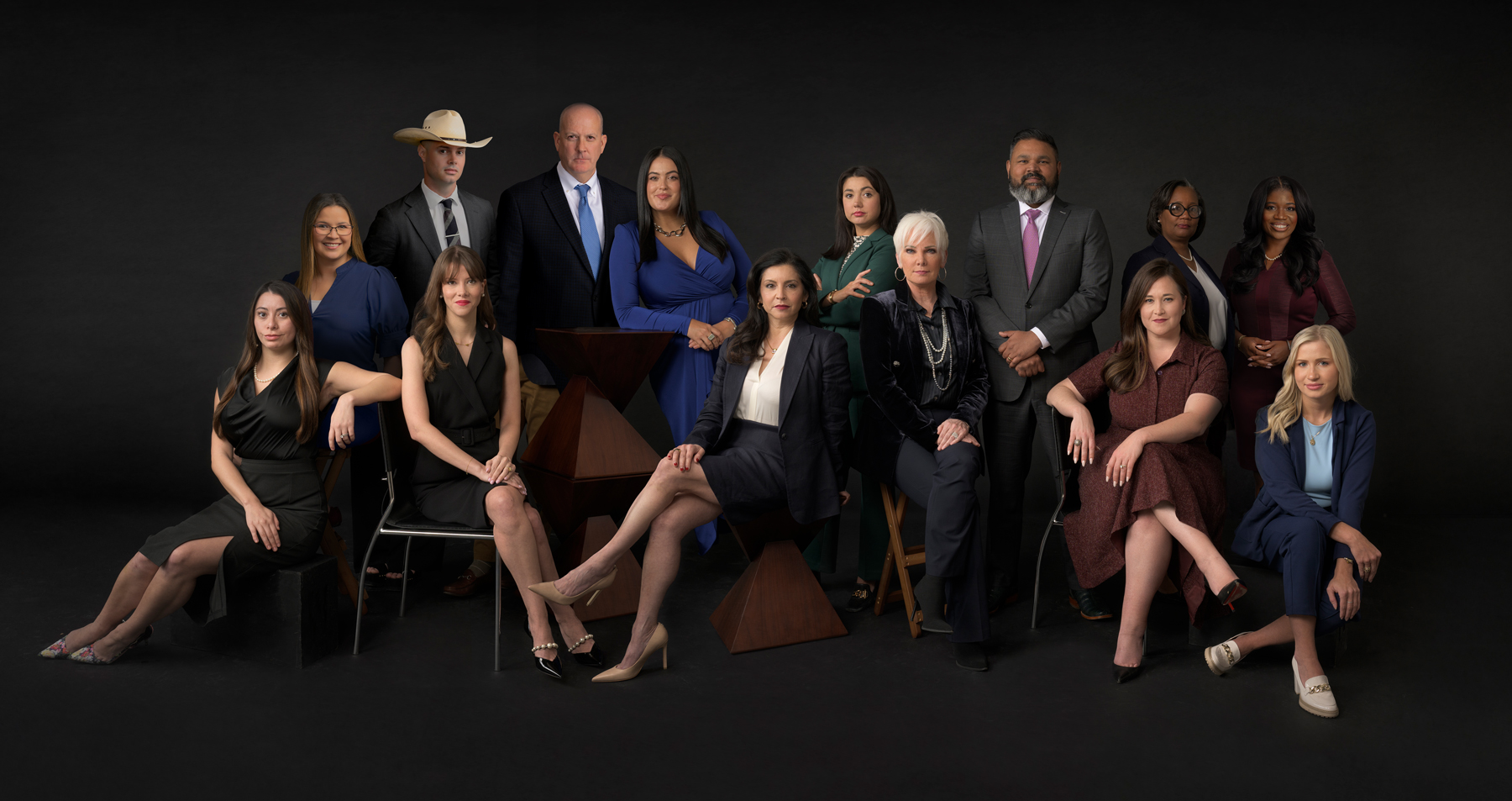
When you’re facing criminal charges in Fort Worth, you need attorneys who know the local courts, the prosecutors, and the judges. You need a team with the resources to investigate your case thoroughly and the trial experience to win if negotiations fail. That’s exactly what Varghese Summersett delivers.
Why Hire Varghese Summersett for Criminal Defense in Fort Worth?
We’ve spent over a decade building a criminal defense practice that consistently outperforms expectations. Our results tell the story: 1,600+ case dismissals, 800+ charge reductions, 300+ grand jury no-bills, and over 700 jury trials. Each number represents a person whose life we protected.
Our team includes four attorneys who are board certified in criminal law by the Texas Board of Legal Specialization. Fewer than 10% of Texas attorneys earn any board certification. Having four specialists under one roof gives our clients access to expertise that most firms simply cannot match.
In 2025, Fort Worth Magazine named 17 Varghese Summersett attorneys to its annual Top Attorneys list. Our criminal defense lawyers also appear repeatedly in 360 West Magazine’s Top Attorneys, Super Lawyers, Rising Stars, and Best Lawyers in America. This concentration of peer-reviewed recognition in a single Fort Worth firm is uncommon.
Many of our senior attorneys are former prosecutors. They spent years on the other side of the courtroom, learning how the state builds cases. Now they use that knowledge to dismantle them. When you hire Varghese Summersett, you’re getting the other team’s playbook.
What Sets Our Fort Worth Criminal Defense Attorneys Apart?
The highest endorsement a criminal defense attorney can receive is trust from peers. Varghese Summersett has become the firm that prosecutors, judges, and other attorneys call when they or their family members face criminal charges.
“Police and prosecutors know every defense attorney in town,” says founding partner Benson Varghese. “When the odds are against them and the tables have turned, it says a lot that they come in and hire us. It means that while we were adversaries, they recognized we were the ones to call when they needed someone to fight for them.”
This trust comes from consistent results in Tarrant County’s criminal courts. We know the prosecutors in the Tarrant County District Attorney’s Office. We understand how each judge runs their courtroom. We’ve tried cases in every criminal court at the Tim Curry Criminal Justice Center. This local knowledge translates directly into better outcomes for our clients.
What Are the Consequences of a Criminal Conviction in Texas?
Texas has some of the toughest criminal penalties in the nation. Under Texas Penal Code Chapter 12, felony convictions carry severe consequences that extend far beyond the courtroom.
A first-degree felony conviction can result in 5 to 99 years in prison and fines up to $10,000. Second-degree felonies carry 2 to 20 years. Third-degree felonies mean 2 to 10 years. Even state jail felonies, the lowest felony classification, can send you to state jail for up to 2 years.
But prison time is just the beginning. A felony conviction means losing your right to vote while incarcerated and on parole. Under federal law, you permanently lose your right to possess firearms. Many professional licenses become unavailable. Employers routinely reject applicants with felony records. Housing applications get denied. Immigration consequences can include deportation for non-citizens.
In 2024, we represented a registered nurse in Tarrant County who faced third-degree felony charges after a patient’s family filed a complaint. A conviction would have ended her 15-year nursing career permanently. By challenging the evidence and presenting a complete picture of the circumstances, we secured a dismissal. She kept her license, her career, and her freedom.
Tarrant County Criminal Courts and Judges
All misdemeanor and felony courts in Tarrant County are housed in the Tim Curry Criminal Justice Center at 401 W. Belknap Street, Fort Worth, TX 76196. Understanding who will preside over your case helps us develop the most effective defense strategy.
County Criminal Courts for Misdemeanor Cases
County Criminal Court No. 1 – Judge David Cook (Republican)
Judge David Cook has served on the bench since 2015. Before his judicial role, he practiced law privately for two decades, gaining extensive experience in criminal law.
Location: 5th Floor | Phone: (817) 884-1337
County Criminal Court No. 2 – Judge Carey F. Walker (Republican)
Judge Carey F. Walker has presided over County Criminal Court No. 2 since 2014. He operated his own law practice for nearly two decades before his election. He graduated from East Texas State University (now Texas A&M University-Commerce) and earned his Juris Doctor from Texas Tech University School of Law.
Location: 6th Floor | Phone: (817) 884-1338
County Criminal Court No. 3 – Judge Bob McCoy (Republican)
Judge Bob McCoy previously served as a Justice on the Second Court of Appeals and has a background as a briefing attorney for the Supreme Court of Texas.
Location: 7th Floor | Phone: (817) 884-1374
County Criminal Court No. 4 – Judge Deborah Nekhom (Republican)
Judge Deborah Nekhom has been on the bench since 2003. She is the only bilingual judge in Tarrant County, fluent in Spanish. Her background includes serving as a criminal defense attorney in both state and federal courts.
Location: 5th Floor | Phone: (817) 884-1339
County Criminal Court No. 5 – Judge Jamie Cummings (Republican)
Judge Jamie Cummings has served on the bench since 2019. Before becoming a judge, she worked as a prosecutor in the Tarrant County District Attorney’s Office for over a decade, specializing in domestic violence and sexual assault cases.
Location: 6th Floor | Phone: (817) 884-3420
District Courts for Felony Cases
Criminal District Court No. 1 – Judge Elizabeth H. Beach (Republican)
Appointed by Governor Rick Perry in 2013, Judge Elizabeth H. Beach has been reelected unopposed. She has extensive experience handling felony cases in Tarrant County.
Location: 5th Floor | Phone: (817) 884-1351
Criminal District Court No. 2 – Judge Wayne Salvant (Republican)
Judge Wayne Salvant was appointed in 1995 by Governor George W. Bush. He is a Vietnam veteran and former Marine officer. He has presided over the Drug Rehabilitation Court program, focusing on rehabilitation over incarceration.
Location: 6th Floor | Phone: (817) 884-1347
Criminal District Court No. 3 – Judge Douglas Allen (Republican)
Appointed by Governor Greg Abbott in 2023, Judge Douglas Allen has a background as a district attorney and Assistant U.S. Attorney, bringing federal and state prosecutorial experience to the bench.
Location: 7th Floor | Phone: (817) 884-1356
Criminal District Court No. 4 – Judge Andy Porter (Republican)
Elected in 2022, Judge Andy Porter presides over felony cases in Tarrant County. Prior to taking the bench, he served as an appellate prosecutor.
Location: 8th Floor | Phone: (817) 884-1362
213th District Court – Judge Chris Wolfe (Republican)
Appointed in 2018 by Governor Abbott, Judge Chris Wolfe is a former federal prosecutor with 15 years of experience. He handles a variety of felony cases.
Location: 8th Floor | Phone: (817) 884-1529
297th District Court – Judge Amy Allin (Republican)
Judge Amy Allin was appointed by Governor Abbott in 2025. She is a former assistant criminal district attorney with a strong prosecutorial background.
Location: 5th Floor | Phone: (817) 884-1908
371st District Court – Judge Ryan Hill (Republican)
Judge Ryan Hill is a former chief prosecutor in Tarrant County, known for his work prosecuting violent offenders.
Location: 6th Floor | Phone: (817) 884-2985
372nd District Court – Judge Julie Lugo (Republican)
A native of Bedford, Judge Julie Lugo is a former assistant district attorney who specialized in prosecuting crimes against children and family violence. She graduated from the University of Texas at Dallas and Texas Tech University School of Law.
Location: 6th Floor | Phone: (817) 884-2990
396th District Court – Judge Vincent Giardino (Republican)
Judge Vincent Giardino formerly served as a magistrate in Tarrant County before being elected to the bench. He has extensive experience presiding over pre-trial matters and handles serious felony cases.
Location: 7th Floor | Phone: (817) 884-2768
432nd District Court – Judge Ruben Gonzalez Jr. (Republican)
A Fort Worth native, Judge Ruben Gonzalez Jr. brings extensive trial experience to the 432nd District Court. Before taking the bench, he had a long career as a criminal defense attorney, representing clients in both state and federal courts.
Location: 6th Floor | Phone: (817) 884-2935
485th District Court – Judge Steven Jumes (Republican)
Judge Steven Jumes is board certified in criminal law and widely respected for his experience as a former Assistant U.S. Attorney and felony prosecutor. The 485th District Court is one of Tarrant County’s newest courts, established to handle its growing felony docket.
Location: 8th Floor | Phone: (817) 212-7143
Criminal Defense Services We Provide in Fort Worth
At Varghese Summersett, we handle the full spectrum of criminal cases in Fort Worth and throughout Tarrant County. Our specialized approach means you get attorneys who focus specifically on your type of case.
DWI Defense in Fort Worth
DWI charges under Texas Penal Code § 49.04 are among the most common criminal cases in Tarrant County. A first-offense DWI is a Class B misdemeanor carrying up to 180 days in jail, fines up to $2,000, and driver’s license suspension for up to one year.
But DWI cases are also highly defensible. Our DWI defense team understands the science behind breath and blood testing, the proper procedures for field sobriety tests, and the constitutional requirements for traffic stops.
We challenge DWI cases on multiple fronts. Police must have reasonable suspicion to stop your vehicle. If they didn’t, any evidence gathered afterward may be suppressed under the Fourth Amendment. Field sobriety tests are subjective and can be affected by medical conditions, medications, fatigue, and road conditions. Breath testing equipment must be properly maintained and calibrated according to Texas DPS regulations.
In 2024, we represented a first-time DWI client in Tarrant County whose blood test showed 0.09 BAC. By challenging the traffic stop’s legality and the 15-minute observation period before the breath test, we negotiated a reduction to obstruction of a highway. Our client avoided a DWI conviction entirely.
Drug Crime Defense
Texas drug penalties under the Texas Health and Safety Code are among the harshest in the nation. Possession of 1 gram of cocaine is a state jail felony carrying up to 2 years. Possession of 4 grams becomes a second-degree felony with 2 to 20 years. Drug-free zone enhancements near schools can double these penalties.
Our drug defense team knows how to challenge these cases. Fourth Amendment violations during traffic stops and home searches often provide grounds for suppression. Chain of custody issues can undermine lab results. Field tests produce false positives for legal substances. We examine every angle.
Assault and Violent Crime Defense
Under Texas Penal Code Chapter 22, assault charges range from Class C misdemeanors to first-degree felonies. Aggravated assault with a deadly weapon is a second-degree felony with 2 to 20 years. If the victim is a family member or public servant, penalties increase further.
We’ve successfully defended clients against murder charges, aggravated assault, and other serious violent crimes. Our approach includes thorough independent investigation, expert witnesses in forensics and medical evidence, and effective presentation of self-defense claims under Texas law.
Domestic Violence Defense
Family violence charges under Texas Penal Code § 22.01 carry enhanced penalties and collateral consequences. Even a misdemeanor conviction triggers a federal firearms prohibition under 18 U.S.C. § 922(g)(9). Protective orders can affect custody and living arrangements.
These cases often involve complex family dynamics, he-said-she-said situations, and accusers who later wish to drop charges. We know how to investigate these cases thoroughly while protecting our clients’ rights.
Federal Criminal Defense
Federal cases differ from state cases in almost every way. Federal prosecutors have more resources. Federal penalties are often more severe under the U.S. Sentencing Guidelines. Federal cases are more likely to go to trial.
Our federal defense team includes former federal prosecutors who know how the system works from the inside. We’ve defended clients against drug trafficking, white-collar crimes, weapons charges, and complex conspiracy cases in the Northern District of Texas.
White Collar Crime Defense
Fraud, embezzlement, money laundering, and tax evasion cases require attorneys with specialized knowledge of financial systems and federal law. These cases often involve voluminous documents and complex transactions.
We’ve represented business owners, executives, and professionals facing federal fraud charges, SEC violations, and tax evasion allegations. We know that white collar cases are often won or lost in the pre-trial phase through careful document analysis and strategic motion practice.
Sex Crime Defense
Sex crime charges carry unique stigma and severe consequences beyond criminal penalties. Under Texas Code of Criminal Procedure Chapter 62, convictions often require lifetime sex offender registration, which affects where you can live, work, and travel.
We understand the sensitive nature of these cases. We investigate accusers’ backgrounds and motivations, work with psychologists and medical experts, and know how to challenge physical evidence and consent issues effectively.
Juvenile Defense
When a young person faces criminal charges, the consequences can affect the rest of their life. Juvenile records can impact college admissions, job opportunities, and military service. The juvenile justice system in Texas is supposed to focus on rehabilitation rather than punishment, and our board certified juvenile defense attorney Lisa Herrick knows how to navigate it.
We work to resolve cases quickly, often before formal charges are filed. We pursue diversion programs, counseling services, and alternatives to formal prosecution. Our goal is always to protect young clients’ futures.

What Should You Do if a Detective Calls?
The call comes unexpectedly. “This is Detective Johnson with Fort Worth Police. We’d like to talk to you about an incident. You’re not under arrest. We just want to clear some things up.”
Stop. This moment could determine your entire case.
Detectives don’t call for friendly chats. They don’t want to “clear things up.” They’re building a case, and they’re hoping you’ll help them build it against yourself. According to research on police interrogations, the majority of criminal defendants make incriminating statements during police questioning. Many of those people thought they were just “cooperating.”
Detective Johnson might sound friendly. He might say he’s “on your side” or that he “just needs to hear your version of events.” But detectives are trained in psychological manipulation. They know exactly what to say to get you talking, and they’re recording every word.
“I’ve seen too many cases where good people destroyed their own defense by trying to ‘help’ the police,” says Christy Jack, a former prosecutor who now defends clients at Varghese Summersett. “They think if they just explain what really happened, the police will understand and leave them alone. But that’s not how the system works. Once you’re on their radar, anything you say will be used to build a case against you.”
Your constitutional rights exist for a reason. You have the right to remain silent under the Fifth Amendment. You have the right to an attorney under the Sixth Amendment. When Detective Johnson calls, here’s what you say: “I need to speak with my attorney before I can talk to you.” Then you hang up and call us.
How Does the Criminal Justice Process Work in Tarrant County?
Understanding what happens after an arrest helps you make informed decisions. Here’s how criminal cases move through the Tarrant County court system.
Arrest and Booking
Your journey typically begins with an arrest. You might be arrested at the scene, during a traffic stop, or at your home after an investigation. You’ll be taken to the Tarrant County Jail or a local holding facility for booking, which includes fingerprinting and photographing.
During this time, you may be questioned again. Don’t answer. Ask for your lawyer. Every time.
Magistrate Hearing and Bail
Within 48 hours of your arrest, you must be brought before a magistrate judge under Texas Code of Criminal Procedure Chapter 15. At this hearing, you’ll be formally informed of the charges. The judge will read your rights and set bail.
Bail amounts vary based on charges, criminal history, and flight risk. For minor misdemeanors, bail might be a few hundred dollars. For serious felonies, it could be tens of thousands or more. If you can’t afford bail, a bondsman typically charges 10% of the bail amount. We often argue for reduced bail or release on personal recognizance.
Grand Jury (for Felonies)
Felony cases go before a grand jury, a group of 12 citizens who decide whether there’s probable cause to formally charge you. This typically happens within a few months of arrest. The process is secret. You and your attorney can’t be present.
If the grand jury votes to indict, your case moves forward. If they vote “no bill,” charges are dropped. We’ve secured over 300 no-bills from grand juries by presenting evidence to prosecutors before the grand jury convenes.
Pre-Trial Motions and Discovery
This phase is often the most important. During discovery, we review all evidence the prosecution plans to use: police reports, witness statements, physical evidence, lab results, and recordings. We also investigate independently.
Pre-trial motions can exclude illegally obtained evidence or even dismiss charges entirely. A motion to suppress under the Fourth Amendment can eliminate the prosecution’s key evidence. These motions often determine case outcomes.
Plea Negotiations
Over 90% of criminal cases resolve through plea negotiations rather than trial. During negotiations, we work with prosecutors to reach agreements that may include charge reductions, favorable sentence recommendations, or dismissal of some charges.
The decision to accept a plea offer is always yours. We advise you on the strengths and weaknesses of your case and the likelihood of success at trial.
Trial
If your case goes to trial, you have the right to a jury trial for most charges. Jury trials typically last from one day to several weeks. The prosecution presents their case first. We cross-examine their witnesses and challenge their evidence. Then we present your defense.
We’ve tried over 700 jury cases. Prosecutors know we’re not afraid to go to trial, which gives us leverage in negotiations.
Sentencing
If convicted, sentencing can be done by the judge or jury. Possible sentences include probation, deferred adjudication, jail or prison time, and fines. Deferred adjudication is a special type of probation where successful completion means you won’t have a final conviction on your record.
A Fort Worth Law Firm Built Different
Most law firms operate like traditional legal practices. Varghese Summersett runs like a modern business, and the results show. We’re a three-time Inc. 5000 honoree (2018, 2024, 2025), placing us among the fastest-growing private companies in America. This recognition is rare for a law firm and reflects our investment in technology, talent, and client service.
In 2023, the Fort Worth Chamber of Commerce named Varghese Summersett Small Business of the Year in the 21-50 employee category at the State of the City event in downtown Fort Worth. The award recognizes entrepreneurship, fiscal discipline, innovation, and community engagement.
Founding partner Benson Varghese received the 2025 Entrepreneur of Excellence award, and the firm has been named a Best Company to Work For in Fort Worth for three consecutive years. Why does this matter for clients? Because the best attorneys want to work where they can do their best work. Our team of over 70 professionals chose to be here because they believe in how we practice law.
Serving Fort Worth and All of Tarrant County
Varghese Summersett serves clients throughout Fort Worth and all of Tarrant County, including Arlington, Grand Prairie, Euless, Bedford, Hurst, Colleyville, Grapevine, Southlake, Keller, North Richland Hills, Haltom City, Watauga, Saginaw, Mansfield, Burleson, White Settlement, Azle, and Lake Worth.
No matter where you’re located in Tarrant County, we have the experience, resources, and local knowledge to provide effective criminal defense representation.
Contact a Fort Worth Criminal Defense Attorney Today
If you’re facing criminal charges in Fort Worth or anywhere in Tarrant County, time matters. Every day you wait is a day that evidence might be lost, witnesses might disappear, and your options might become more limited.
At Varghese Summersett, we’ve built our reputation one case at a time, one client at a time, one victory at a time. We’ve helped thousands of people navigate the criminal justice system and protect their futures.
The consultation is confidential, and there’s no obligation. We’ll review your case, explain your options, and help you understand what you’re facing. Most importantly, you’ll know you’re not alone.
Call us at (817) 203-2220 to get started.

Frequently Asked Questions About Criminal Defense in Fort Worth
How much does a criminal defense attorney cost in Fort Worth?
The cost varies depending on the complexity of your case, the charges, and the experience of your attorney. At Varghese Summersett, we offer transparent pricing and payment plans. The cost of inadequate representation, including potential prison time and a permanent criminal record, far exceeds the cost of hiring experienced counsel.
Should I talk to police if I’m innocent?
No. Even if you’re completely innocent, never speak to police without an attorney present. Police are trained in interrogation techniques designed to get you to say things that can be used against you. Innocent people are wrongfully convicted every day because they tried to explain their side. Exercise your right to remain silent and call an attorney immediately.
What’s the difference between a misdemeanor and a felony in Texas?
Misdemeanors are less serious crimes punishable by up to one year in county jail and fines up to $4,000. Felonies are more serious crimes punishable by more than one year in state prison. Felony convictions carry more severe long-term consequences, including loss of voting rights, inability to own firearms, and significant impacts on employment and housing.
Can I get my criminal record expunged in Texas?
Texas law allows for expunction (complete removal) of criminal records in certain circumstances, such as when charges are dismissed, you’re acquitted at trial, or you’re pardoned. Sealing (non-disclosure) is available for some cases that result in deferred adjudication. The eligibility requirements are complex. An experienced attorney can review your specific situation.
What should I do if a detective contacts me?
Politely tell the detective that you need to speak with your attorney before answering any questions. Then contact Varghese Summersett immediately at (817) 203-2220. Don’t try to explain your side of the story or provide any information. Anything you say can be used against you in court.